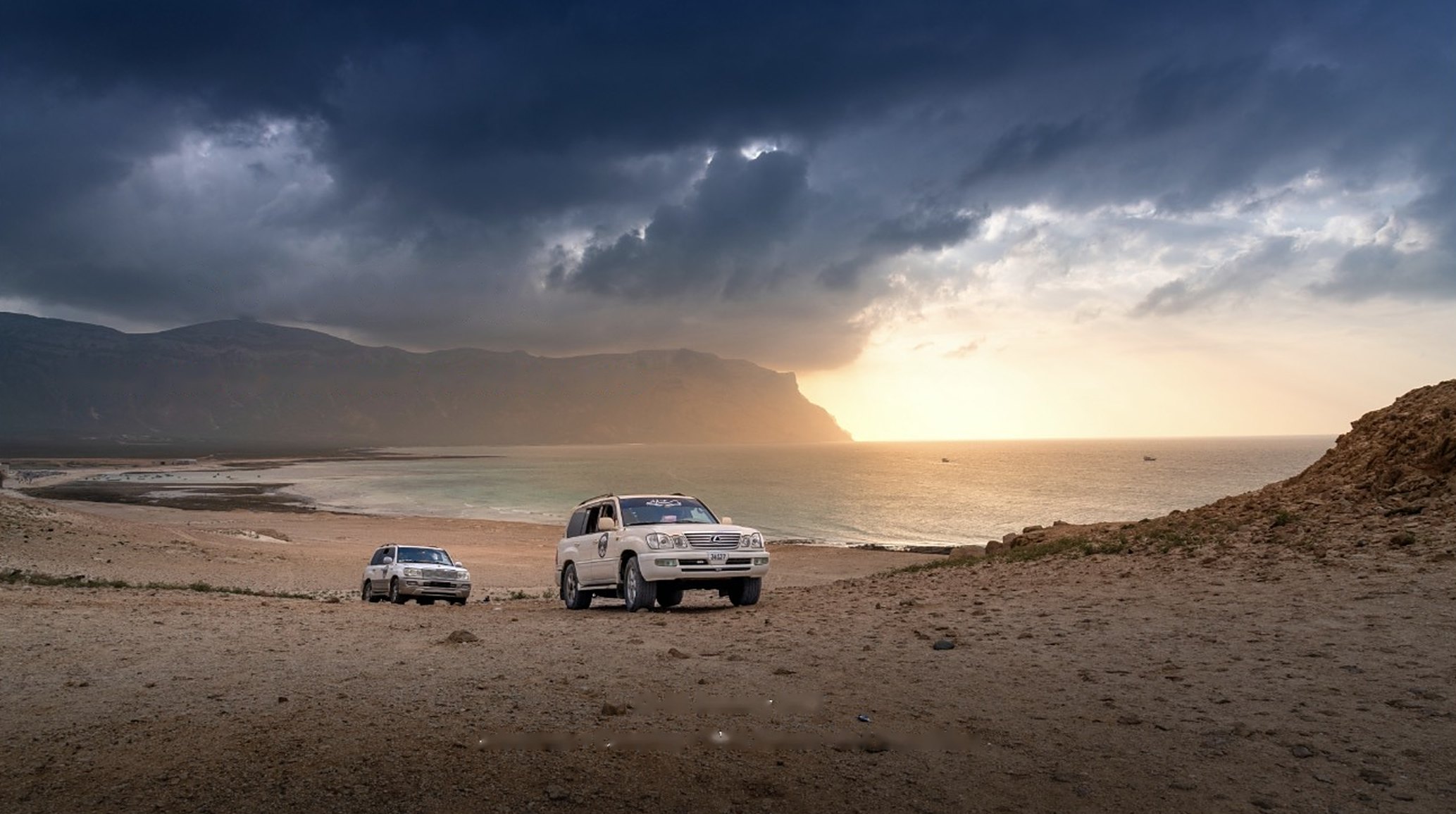
Eight days of a real expedition across one of the most amazing and remote islands on our planet. Adventure • Camping • Wild nature • 4x4.

There are places we travel to simply to see something new. And there are places where, after just a few days, it feels as if the familiar world has been left somewhere very far behind.
Socotra is one of those places.
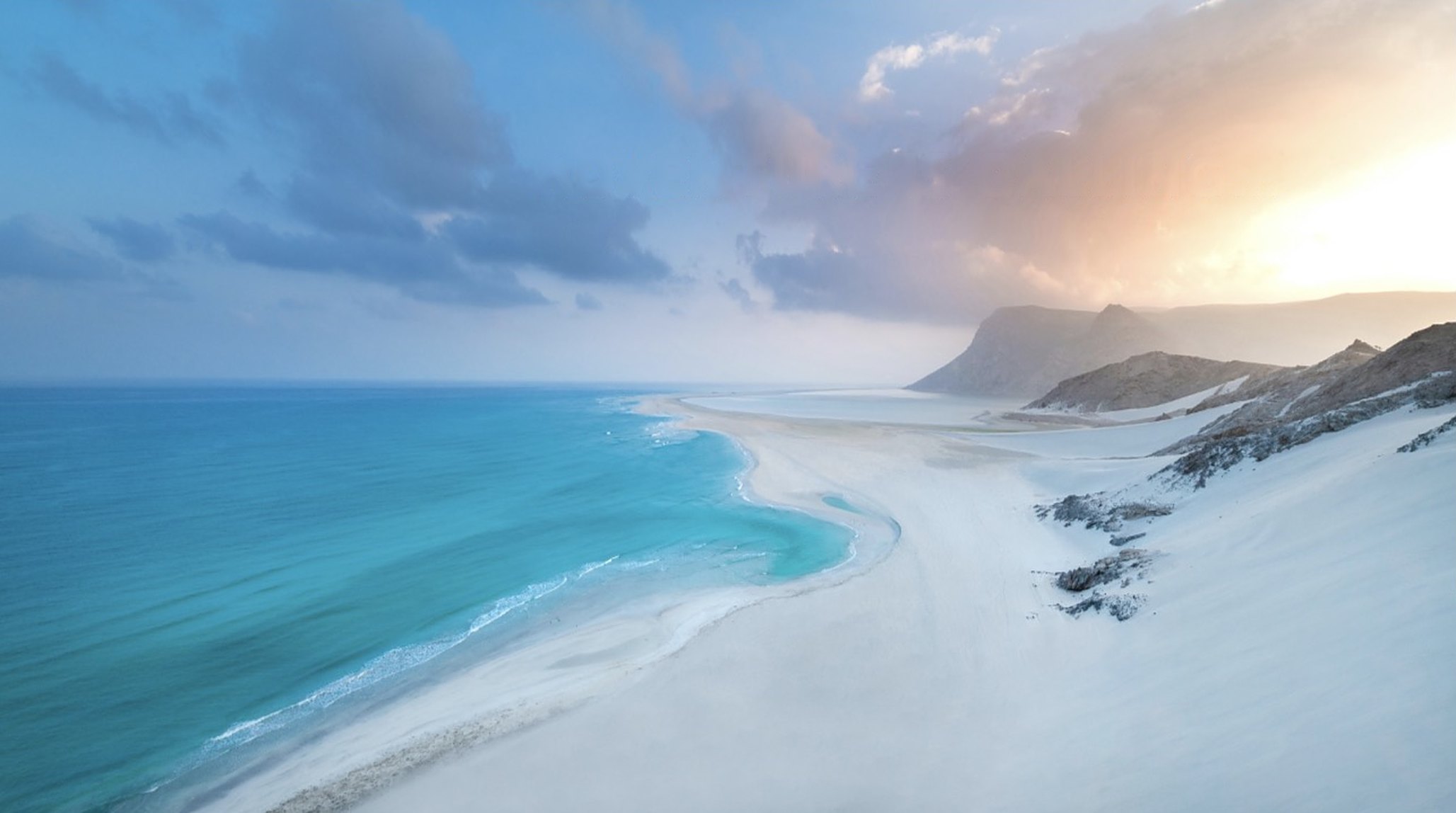
One of the most isolated islands on Earth, lost in the middle of the Indian Ocean, with nature and landscapes you will not find anywhere else in the world. Dragon blood trees. Strange bottle trees. Huge white dunes rolling straight down to the ocean. Turquoise lagoons. Canyons with hidden natural pools. Ancient caves. Coral reefs. Empty beaches and landscapes that sometimes look more like another planet than a place on Earth.
But with Socotra there is one important thing: you cannot truly feel this island from a hotel window.
That is exactly why this trip will be a real VABO Expedition.
We will explore the island in 4x4 vehicles, change locations almost every day, hike through canyons and mountains, swim in natural pools and the ocean, explore caves, watch sunrises among the dragon blood trees and spend our evenings on wild beaches.
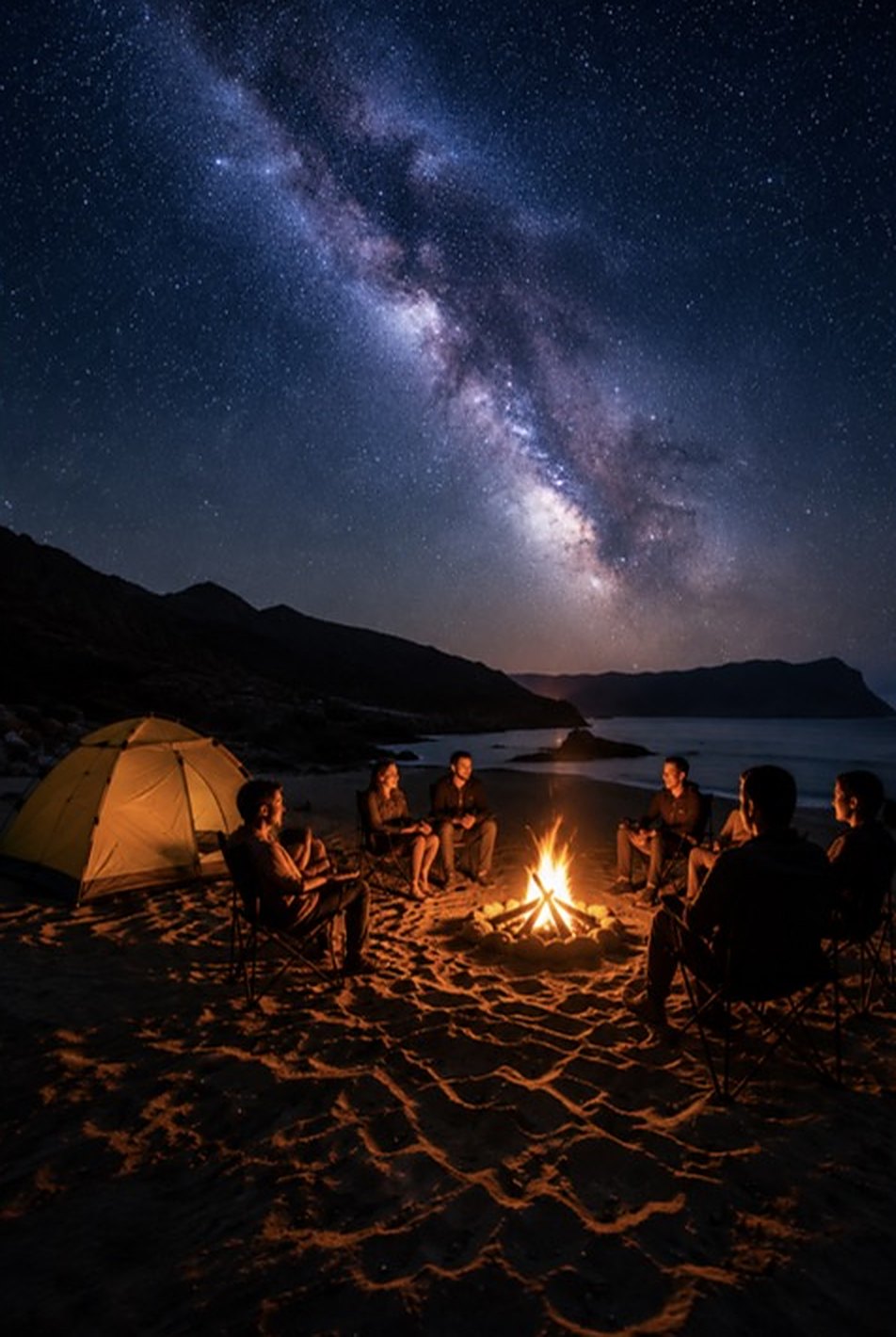
And for most of the trip we will live in camps right in the middle of nature. Our hotels will be beaches, lagoons, mountains and forests of dragon blood trees. Instead of city noise — the ocean. Instead of restaurants — dinners at our camp. And instead of a ceiling overhead — one of the clearest starry skies you can imagine.
That is the main idea of this trip: less civilisation — more adventure. Less comfort for comfort's sake — more real moments that stay with us long after we return home.
This is not a classic holiday, and not a tour where we simply tick off the next points on a map.
These are eight days of a real expedition across one of the most amazing and remote islands on our planet.
The format of the expedition is built around exactly this idea — to disconnect for a few days from the usual rhythm of life, live in the middle of wild nature and get as close as possible to the unique world of Socotra.
This is a journey to one of the most isolated and unusual islands on Earth — a place where nature is still truly wild and every new day opens a completely different landscape. From swimming in turquoise lagoons and hidden canyon pools to hiking among Dragon Blood Trees, exploring ancient caves, crossing remote mountain plateaus or spending nights on empty beaches under the stars — Socotra is not just a place you visit. It is a place you live. For eight days we leave ordinary hotels and noisy cities behind, switch to 4x4s and set off to explore the island, pitching our camps in some of Socotra's most striking places.

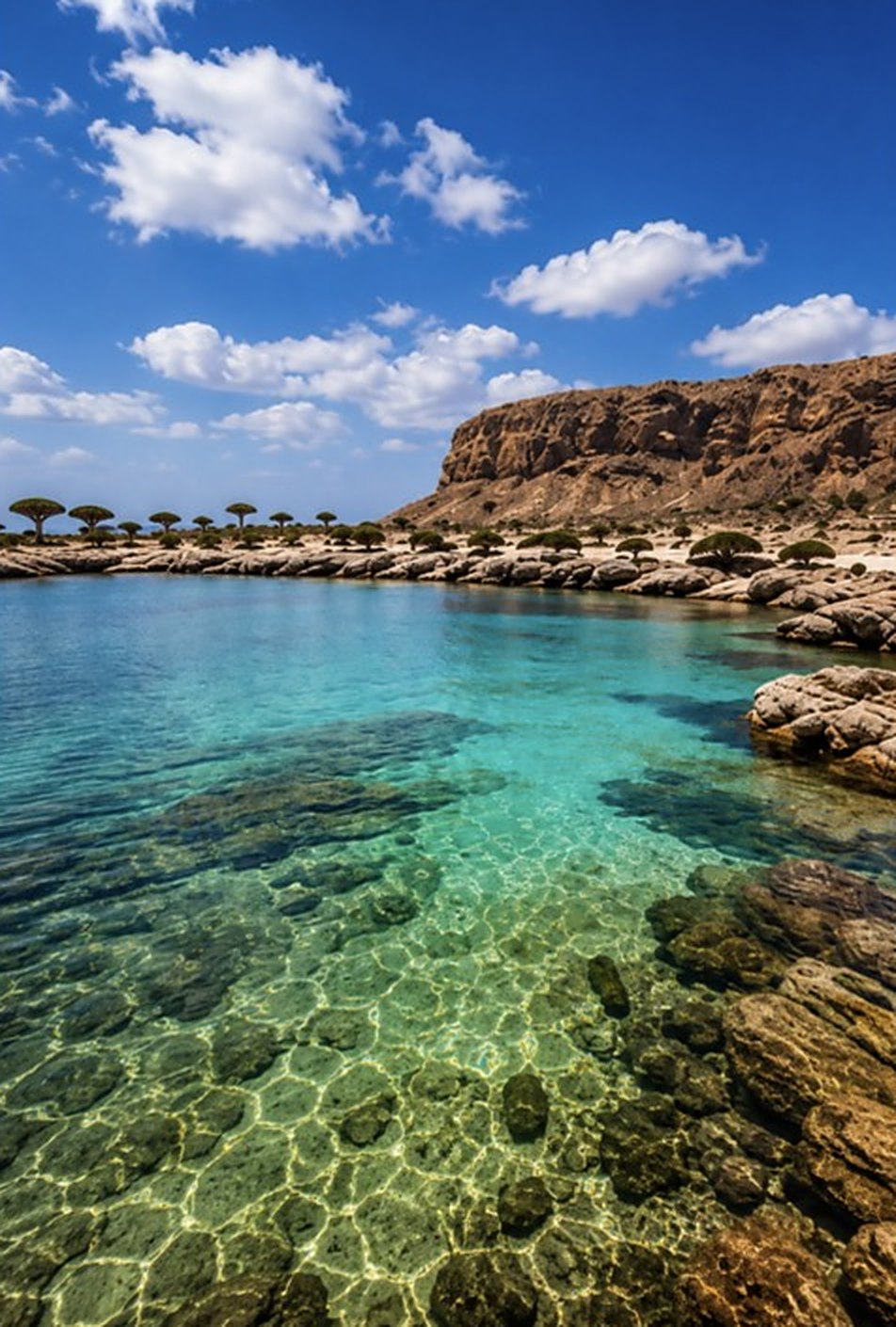
Swim in turquoise water surrounded by white sand, striking cliffs and almost untouched nature.

A boat ride along Socotra's wild coastline to one of the island's most remote beaches, with a chance to meet schools of spinner dolphins on the way.

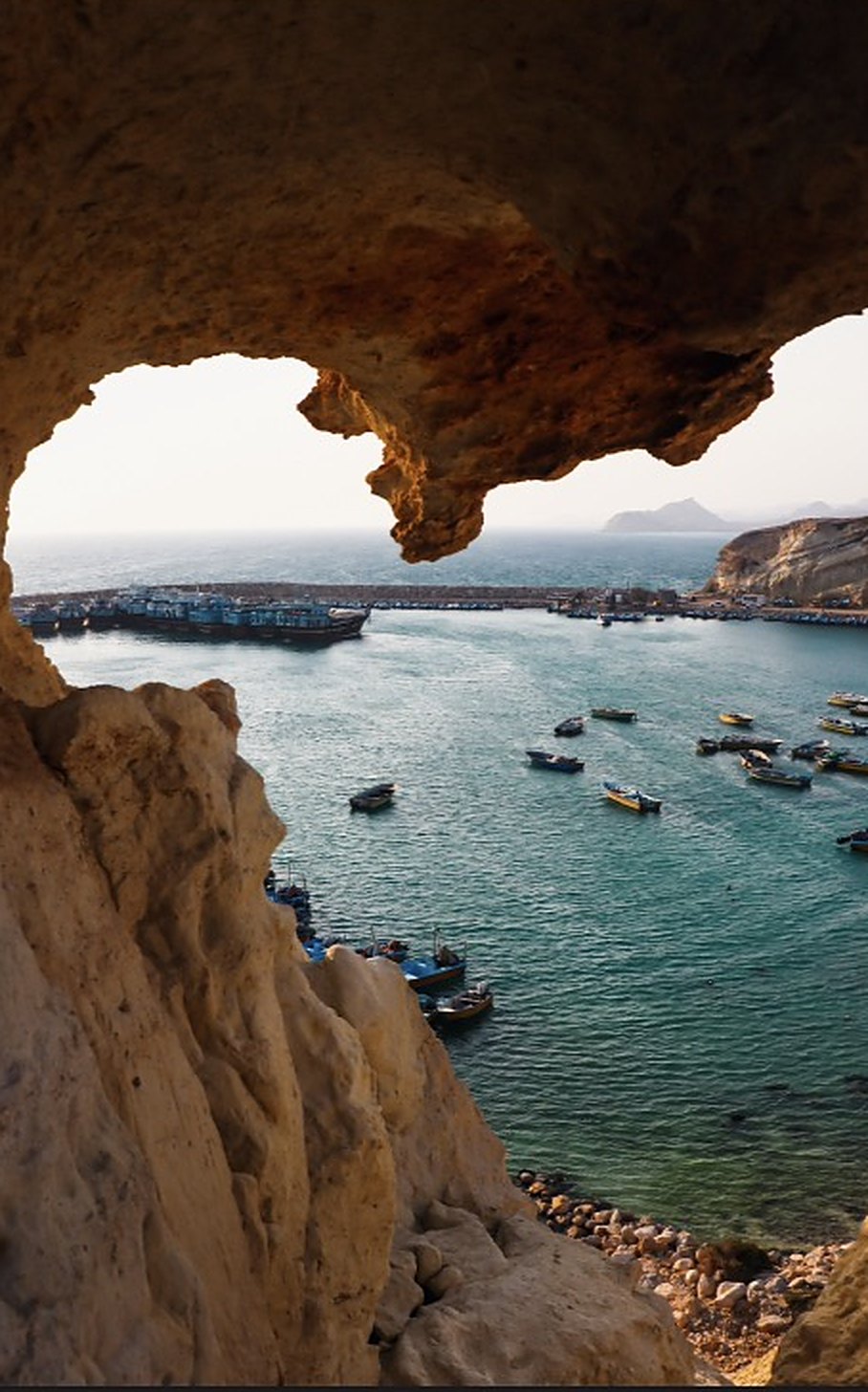
We will explore Degub Cave and hike to the enormous Hoq Cave with its ancient stalactites and stalagmites.

This trip is made for those for whom it is not enough to simply see a new place. We want to live it.
So instead of one hotel and daily excursions, this trip is about 4x4s, camping, hiking, boats, the ocean, caves, canyons, natural pools, sunrises and evenings by our camp.
We will spend most of our time outdoors, and conditions will be much simpler than on our classic VABO road trips. And that is exactly the point.
Because Socotra is not a place where comfort should be measured by the number of stars next to a hotel's name.
Here comfort is waking up in the morning, opening your tent and seeing the ocean in front of you. Or a forest of dragon blood trees. Or huge white dunes disappearing into the ocean.
For these eight days our small camp, our 4x4s and the people travelling alongside us will become our home.
And somewhere between dusty roads, evenings under the stars, early starts for sunrises, swims in hidden canyons and evenings by the ocean, a group of strangers gradually turns into a real team.
That is exactly what the VABO Expedition format is.
Adventure first. Comfort where it truly matters. And moments we will most likely remember for many years.
The programme and the order of visiting individual locations may be adjusted during the trip depending on road conditions, weather or other circumstances that may arise during the expedition.
Open each day to see the plan.
13 January is our official arrival and team gathering day.
Everyone can fly to Jeddah at a time that suits them, depending on flight connections. We deliberately do not plan a busy programme for this day. After the journey to Saudi Arabia, the main thing is to bring the whole team together, check into the hotel and rest well before the expedition begins. After arrival — hotel check-in, meeting the rest of the team and a short briefing about the adventure awaiting us. For those who arrive early enough, we can also organise our first group dinner in Jeddah. This will be our last night in an ordinary hotel before we leave most of civilisation behind the next morning.
Night Hotel in Jeddah
Early in the morning we head to the airport and fly to the place we have all gathered for: Socotra.
After landing we meet our local team, load our things into the 4x4s — and from this moment the real expedition begins. Our first stop is Detwah Lagoon, one of Socotra's most famous natural locations. A huge strip of white sand, shallow turquoise water and mountains around the lagoon create the very landscape that quickly makes you realise: we have really reached Socotra. After the journey we will have time to slow down a little — swim, walk along the coast and explore the nearby rocks, from where panoramic views of the lagoon open up. And in the evening our first dinner at camp and our first night under Socotra's starry sky await us. It is right by Detwah Lagoon that we will pitch our first camp in the middle of wild nature.
Night Camping by Detwah Lagoon
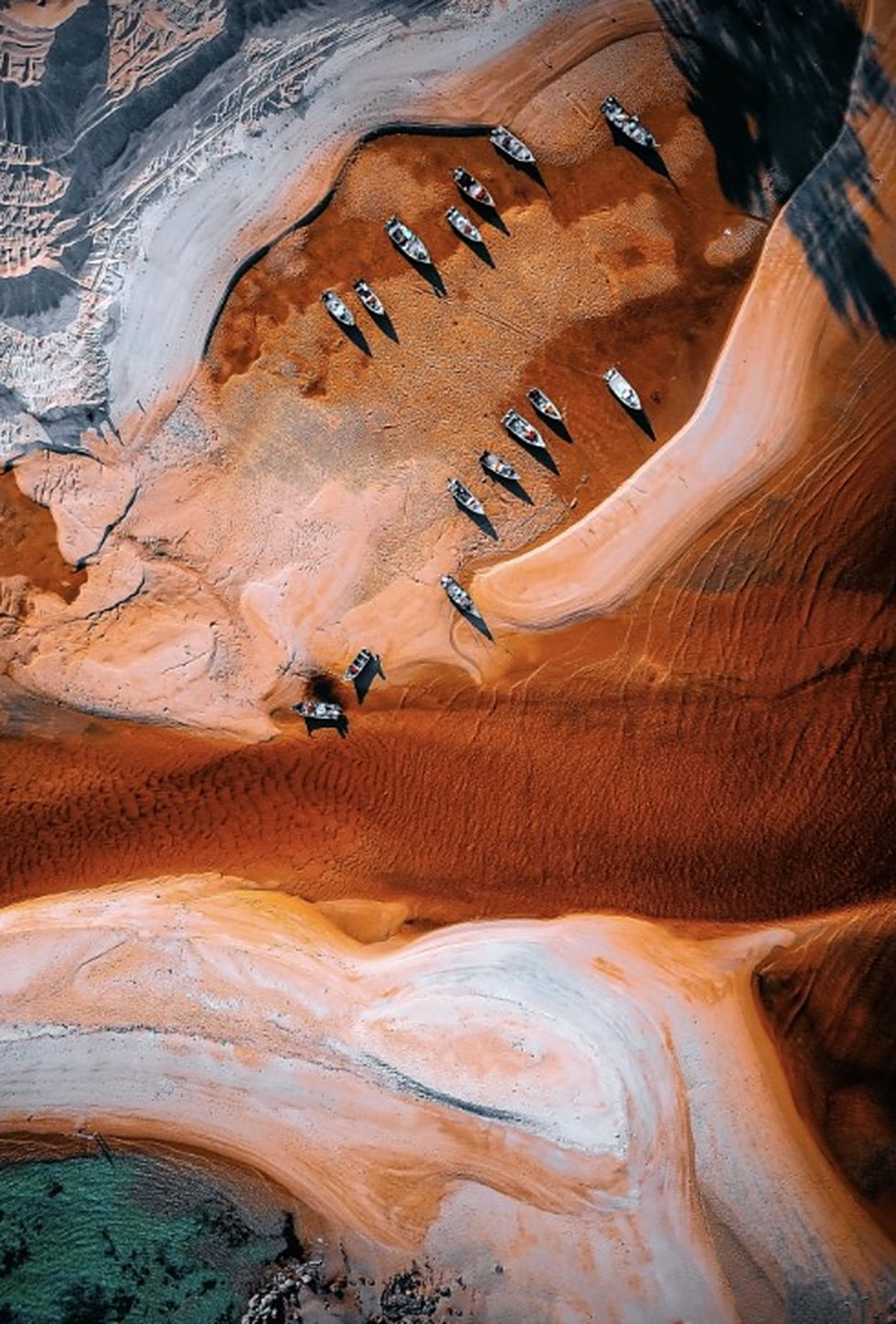
We wake up by the lagoon, have breakfast at camp and head to the small traditional fishing village of Qalansiyah. From here we swap our 4x4s for boats. A scenic ride of about 30 minutes along the wild coastline brings us to Shuab Beach — one of the most beautiful and remote beaches on the island. Keep a close eye on the water: there is a good chance of seeing schools of spinner dolphins on the way. The local programme also mentions the possibility of meeting whale sharks in this part of the island.
White sand. Crystal-clear turquoise water. Mountains. And almost complete absence of civilisation. We spend part of the day here — swimming, relaxing and exploring the coast — before returning by boat towards Detwah. Later, if you wish, you can take a walk and meet Eliah — Socotra's famous cave dweller and one of the legendary characters of this part of the island. In the evening we return to our camp for dinner and spend one more night by the lagoon.
Night Camping by Detwah Lagoon
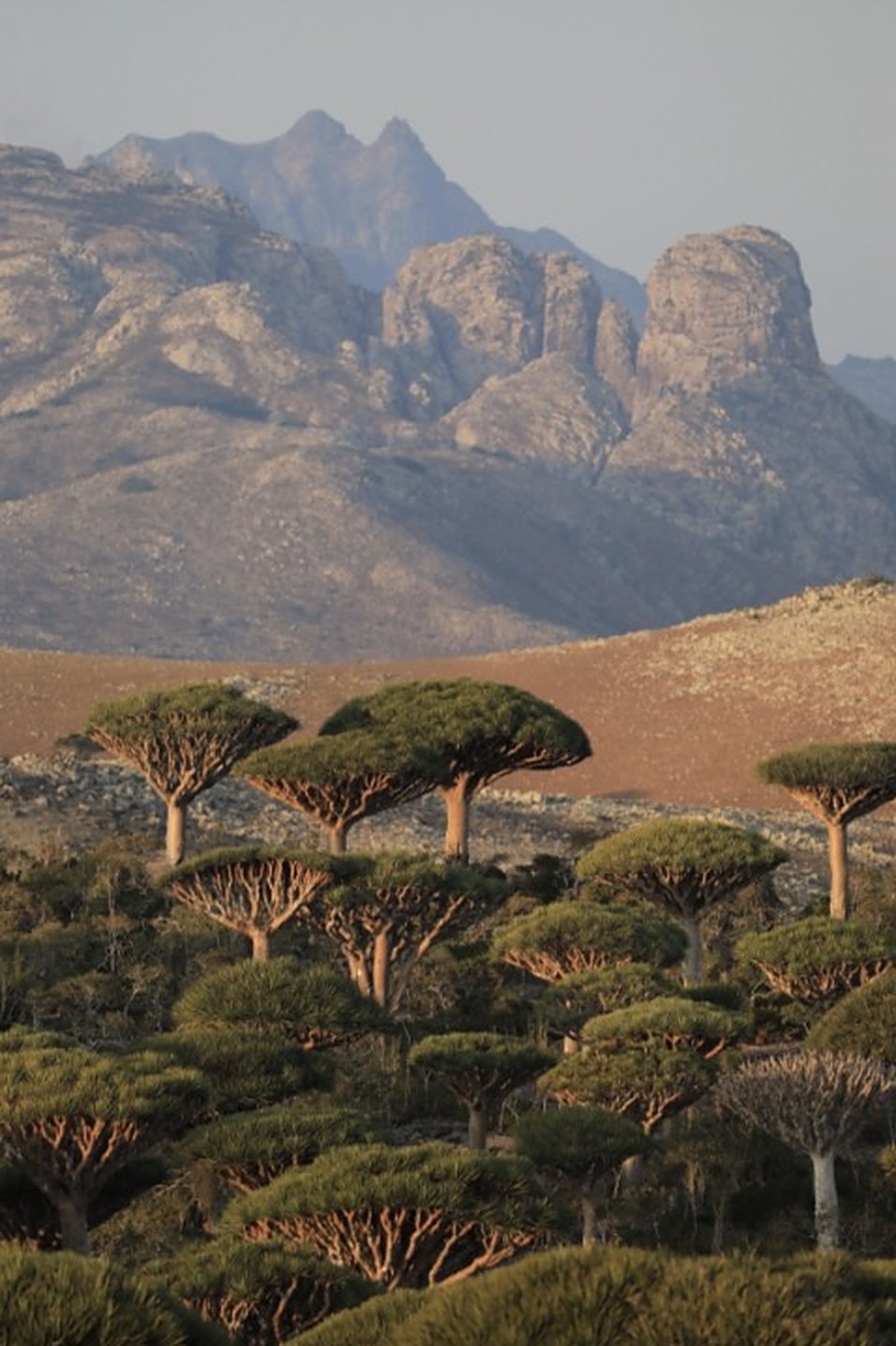
Today we leave the coast behind and head into the very heart of the island. We climb to the impressive Diksam Plateau and from there descend into the deep limestone canyon of Wadi Dirhur. In the rainy season fresh water collects in the canyon, forming natural emerald pools — a perfect place to swim among huge limestone walls. But the most special part of the day is still ahead. We continue to Firhmin Forest — a place with one of the largest concentrations of the legendary Dragon Blood Trees on Socotra.
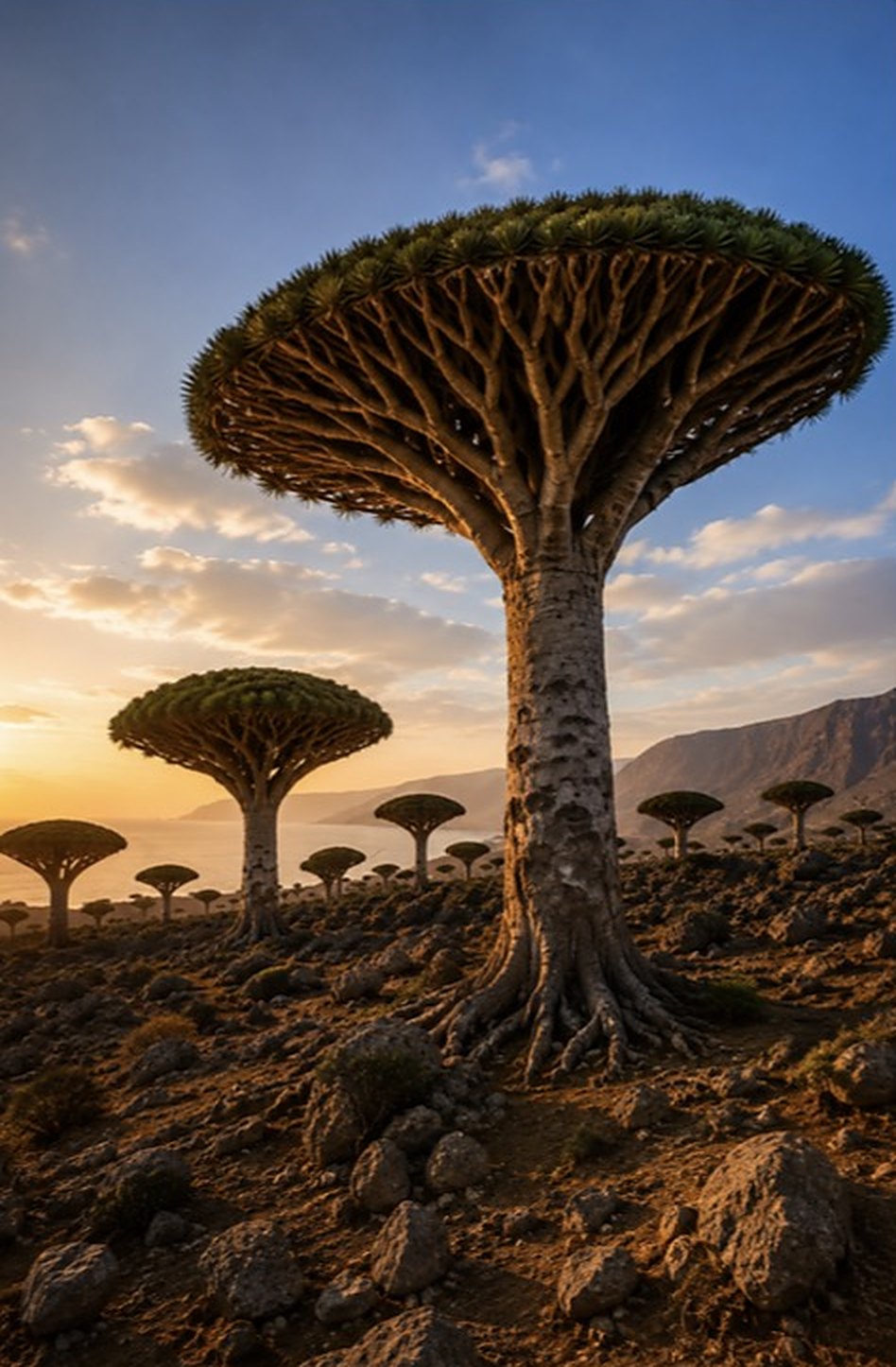
Ancient trees. Strange umbrella-shaped crowns. Mountains. And almost no artificial light around. And tonight this forest will be our home.
We pitch camp right among the dragon blood trees. Sunset. Dinner in the middle of the forest. A sky full of stars. And probably one of the most surreal camping locations of our whole trip.
Night Camping in the Firhmin Dragon Blood Forest
Today it is definitely worth waking up earlier. The first rays of sun breaking through the umbrella-like crowns of the Dragon Blood Trees create one of the most atmospheric pictures of the whole expedition.
After breakfast we spend a little more time exploring Firhmin Forest and learning how local people traditionally and sustainably collect the dark red resin of the dragon blood trees.
And then the landscape changes completely. We drive south to Degub Cave, explore its huge underground spaces, and then continue to the coast of the Indian Ocean and Omaq Beach.
Closer to evening we head to the giant sand dunes of Nauf and Zahaq. The wind constantly reshapes these gigantic dunes, and the evening light paints the whole landscape in golden tones.
Desert on one side. Ocean on the other. We stay here until sunset, then return to our beach camp for dinner.
Night Camping on the beach
A new day — and another completely different Socotra. After breakfast we head to Wadi Kalissan. A hike of about an hour takes us down through the canyon, among strange endemic bottle trees.
At the bottom of the canyon, hidden between pale limestone walls, deep natural pools of fresh water await us. The water here is incredibly clear and turquoise — and after the hike it is unlikely that anyone will need much persuading to jump in. After Wadi Kalissan we continue east to one of Socotra's most surreal landscapes — Archer Beach. Here huge white sand dunes pour down from almost vertical mountain slopes straight to the ocean. The scale of this place is hard to grasp until you find yourself right beneath them. We pitch our camp by the sea. And then everything is as simple as it gets: ocean, sunset, dinner, camp and one more night far from cities and civilisation.
Night Camping on Archer Beach
For those who want a little more adventure, this day starts even before sunrise. At around 05:00 in the morning, if you wish, you can climb the huge Archer dunes to greet the sunrise over the Arabian Sea. After that we return to camp for breakfast and get ready for a completely different adventure.
Today a 2–3-hour hike to Hoq Cave awaits us — one of the largest and most impressive cave systems on Socotra. Inside we explore huge underground spaces with ancient stalactites and stalagmites that have formed over thousands of years. Closer to evening we head even further east — to Ras Aresal, the wild eastern point of the island. It is here, at the edge of Socotra, that powerful sea currents meet. We stay until sunset, then return to Archer Beach. One more dinner by the ocean. One more night under the stars.
Night Camping by Archer Beach
Today we discover yet another completely different side of the island. First we head to the Homhil protected area. Among frankincense trees and remarkable bottle trees we reach the famous natural Homhil Infinity Pool. The pool sits right on the edge of the plateau, with an incredible view of the endless Arabian Sea below. It is probably one of the most spectacular natural pools you can swim in anywhere. After a swim and lunch in the valley we descend to the coast and continue to the Dihamri Marine Protected Area. This time we swap hiking boots for snorkel masks. Beneath the surface Dihamri hides coral reefs and an incredibly rich marine world, so snorkelling will be one of the main adventures of the day. We spend the second half of the day swimming, exploring the underwater world and enjoying some of our last hours in Socotra's wild nature. And when the sun starts to sink towards the horizon, we will find one more special place to spend our last sunset on the island.
Night Camping
Our last morning at camp. We have breakfast, pack our things and gradually start heading back to where our expedition began. Before the airport we stop in Hadiboh — the island's capital. It is a chance to see a completely different Socotra: local streets, small shops and markets where you can buy souvenirs, including the famous Socotran wild honey. And then it is time to head to the airport.
We say goodbye to our local team and fly back to Jeddah. And somewhere around this moment we probably begin to realise and ask ourselves one simple question: where the hell have we been for the last eight days?
Our expedition officially comes to an end.

This is an adventure expedition, not a physically extreme trip. You do not need special technical skills or previous expedition experience, but you should be ready for an active programme, basic camping conditions and several days away from usual hotel comfort.
Most hikes are of medium difficulty and suitable for people in normal physical shape. The most demanding activity will be the 2–3-hour hike to Hoq Cave, while on other days we have shorter hikes, canyon walks, swimming and optional climbs, such as the early-morning climb up the Archer dunes for sunrise. You do not need to be an experienced hiker — but you should feel comfortable with activities lasting a few hours.
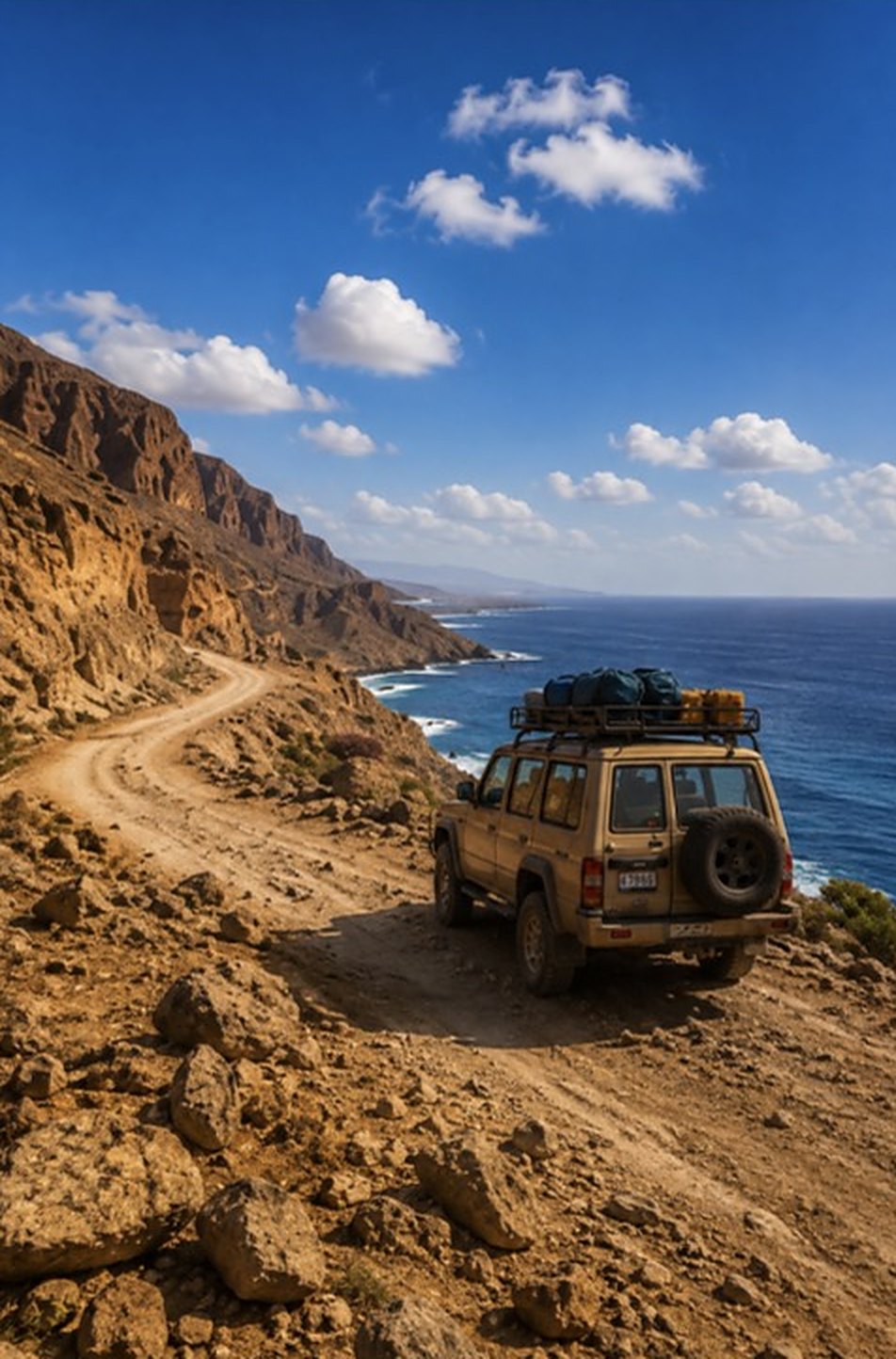
A large part of the adventure on Socotra happens on the road itself. We travel in 4x4 vehicles with experienced local drivers — sometimes on paved roads, sometimes on rough mountain routes, desert terrain and remote off-road sections.
Some transfers can be long and bumpy — but the very ability to reach such remote places is part of this adventure.
Participants do not need any experience of driving a 4x4.
This is probably the biggest difference from our classic VABO road trips. For most of the expedition we will sleep in tents in camps in the middle of wild nature. All the necessary camping equipment will be provided — tents, mattresses, pillows and blankets — but conditions will of course be much simpler than in hotels. Showers and toilets in our camps will be basic, field-style. We do not try to hide this — on the contrary, it is part of what makes a trip to Socotra special.
January is one of the best times to travel to Socotra, but we will still spend most of our days outdoors. Expect sun, wind, warm weather during the day and cooler evenings and nights, especially in the highlands and open camps.

You do not need to be an athlete. You do not need previous camping experience. And you definitely do not need to be a seasoned traveller or expedition participant. But you do need to be ready for adventure. If it is fine for you to get a little dusty, sleep in a tent, wake up early for a sunrise, spend a few hours hiking, be outdoors most of the day and accept that plans may sometimes change because nature has its own plans — everything will be wonderful. Socotra is not about luxury.
The real luxury here is waking up where almost nobody else gets the chance to wake up.
13–21 January 2027 · 9 days / 8 nights
Ask about availabilityMessage Vabo directly on Instagram. Ask about availability, flights and how to join.
To reserve your place, a deposit of €300 is required. The second payment — €900 — must be made within 3 days of the moment flight sales open; we will let you know. The third payment — €1,100 — must be made no later than 45 days before the start of the trip. The remaining €500 is paid in cash when we meet before the start of the trip.
Please note: the programme and the order of visiting individual locations may be adjusted during the trip depending on road conditions, weather or other circumstances that may arise during the expedition.
The overall difficulty is medium. This is an adventure expedition, not a physically extreme trip: no special technical skills or previous experience are needed. The most demanding activity is the 2–3-hour hike to Hoq Cave; on other days there are shorter hikes, canyon walks and swimming.
No. Previous camping experience is not needed, and we travel in 4x4s with experienced local drivers, so participants are not required to drive.
The first night is in a hotel in Jeddah, and for most of the expedition we sleep in tents in camps in the middle of nature: by the lagoon, in the dragon blood forest, on the beaches. All camping equipment is provided: tent, mattress, mattress cover, pillow, pillowcase and blanket.
Much simpler than hotels. Showers and toilets in the camps are basic, field-style. We do not try to hide this — it is part of what makes a trip to Socotra special.
January is one of the best times to travel to Socotra. Expect sun, wind, warm weather during the day and cooler evenings and nights, especially in the highlands and open camps.
The flights Jeddah → Socotra → Jeddah are included. International flights to and from Jeddah (Saudi Arabia) are not — you need to buy them separately. The Socotra tourist visa is included; a Saudi Arabia visa, if required for your nationality, and travel insurance are not, and insurance is mandatory.
Yes. The programme and the order of visiting individual locations may be adjusted during the trip depending on road conditions, weather or other circumstances that may arise during the expedition.
Message Vabo on Instagram. A €300 deposit reserves your place, the second payment of €900 is due within 3 days of flight sales opening (we will let you know), the third payment of €1,100 no later than 45 days before the start of the trip, and the remaining €500 is paid in cash when we meet before the trip starts.
Want to know more or have questions? Message Vabo on Instagram and we'll talk through your expedition to Socotra.
Message us on Instagram@vabo_trips · Direct contact with the organiser